
Compare the best carport designs for homes, from attached covers to freestanding structures, with practical tips for Pacific Northwest weather and style.

Window Awnings That Work in the Northwest
A west-facing living room in July can turn uncomfortable fast. By late afternoon, the sun is pouring through the glass, the room heats up, and the AC works harder than it should. That is exactly where window awnings make a noticeable difference – not just in comfort, but in how your home handles light, heat, and weather day after day.
For homeowners in Portland and Vancouver, that matters more than people sometimes expect. We get bright summer sun, long stretches of rain, and enough seasonal change to make exterior improvements work hard for their keep. A good awning is not there just to decorate a window. It should solve a problem, fit the house correctly, and hold up over time.
Why window awnings still make sense
Some home upgrades are easy to admire but harder to justify. Window awnings are not in that category. When they are designed well and installed correctly, they offer practical value right away.
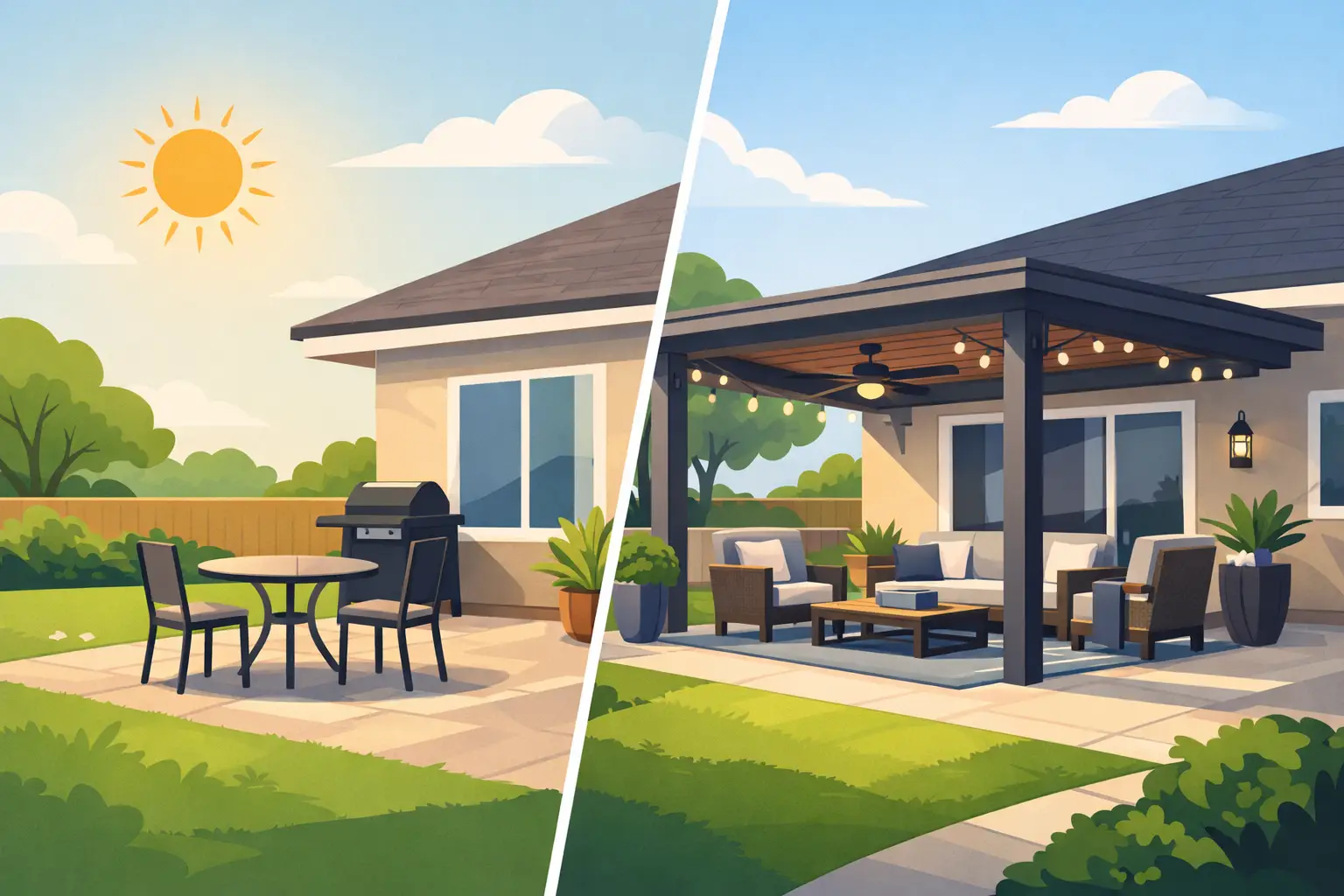
The biggest benefit is shade control. By stopping direct sunlight before it reaches the glass, awnings help reduce indoor heat gain. That can make rooms feel more usable during warmer months, especially on south- and west-facing sides of the home. It can also help reduce glare on screens and protect furnishings from constant sun exposure.
They also add weather protection. In the Pacific Northwest, that can be just as important as summer shade. Awnings help shield windows from heavy rain and can reduce the amount of water that hits the frame and surrounding trim. That does not replace proper window construction, of course, but it does add another layer of protection where homes are exposed to the elements year after year.
Then there is curb appeal. Awnings change the look of a home in a very visible way. The right shape, profile, and color can make plain windows look more finished and give the exterior more character. The trade-off is that style choices matter. A design that looks great on one home can feel out of place on another, which is why custom sizing and thoughtful design are worth it.
Choosing window awnings for your home
Not every window needs an awning, and not every awning should be the same size or style. The best results usually come from looking at the home as a whole rather than treating each opening as a separate decision.
Sun exposure comes first
Orientation matters. West-facing windows often need the most help because they catch strong afternoon sun when outdoor temperatures are already high. South-facing windows can also benefit from shade, especially in spaces that get hot and bright during the middle of the day. North-facing windows may need less solar protection, so homeowners sometimes prioritize appearance or rain coverage there instead.
This is where a site-specific approach pays off. Trees, roof overhangs, neighboring homes, and elevation all affect how much sun a window actually receives. A one-size-fits-all answer usually misses those details.
Style should match the house
Awnings should look like they belong. Traditional homes may work well with softer lines or more classic profiles, while cleaner, simpler designs often suit contemporary exteriors. Color is just as important. You can use an awning to blend in with the existing trim, or you can make it stand out as an accent. Either approach can work if it is intentional.
Homeowners sometimes focus first on fabric or frame color, but scale is just as important. If an awning is too shallow, it may not provide enough shade. If it is oversized, it can overpower the window and make the facade feel heavy. Balance matters.
Materials affect long-term performance
Durability is not a small detail in our climate. Moisture, seasonal debris, and changing temperatures all test exterior products over time. The right materials help reduce maintenance and improve longevity, but there is always a balance between budget, appearance, and expected lifespan.
For many homeowners, the priority is simple: they want something that looks good, performs well, and does not become another maintenance headache. That is why professional guidance matters. Material choices should fit both the design of the home and the conditions the awning will face.
What custom installation changes
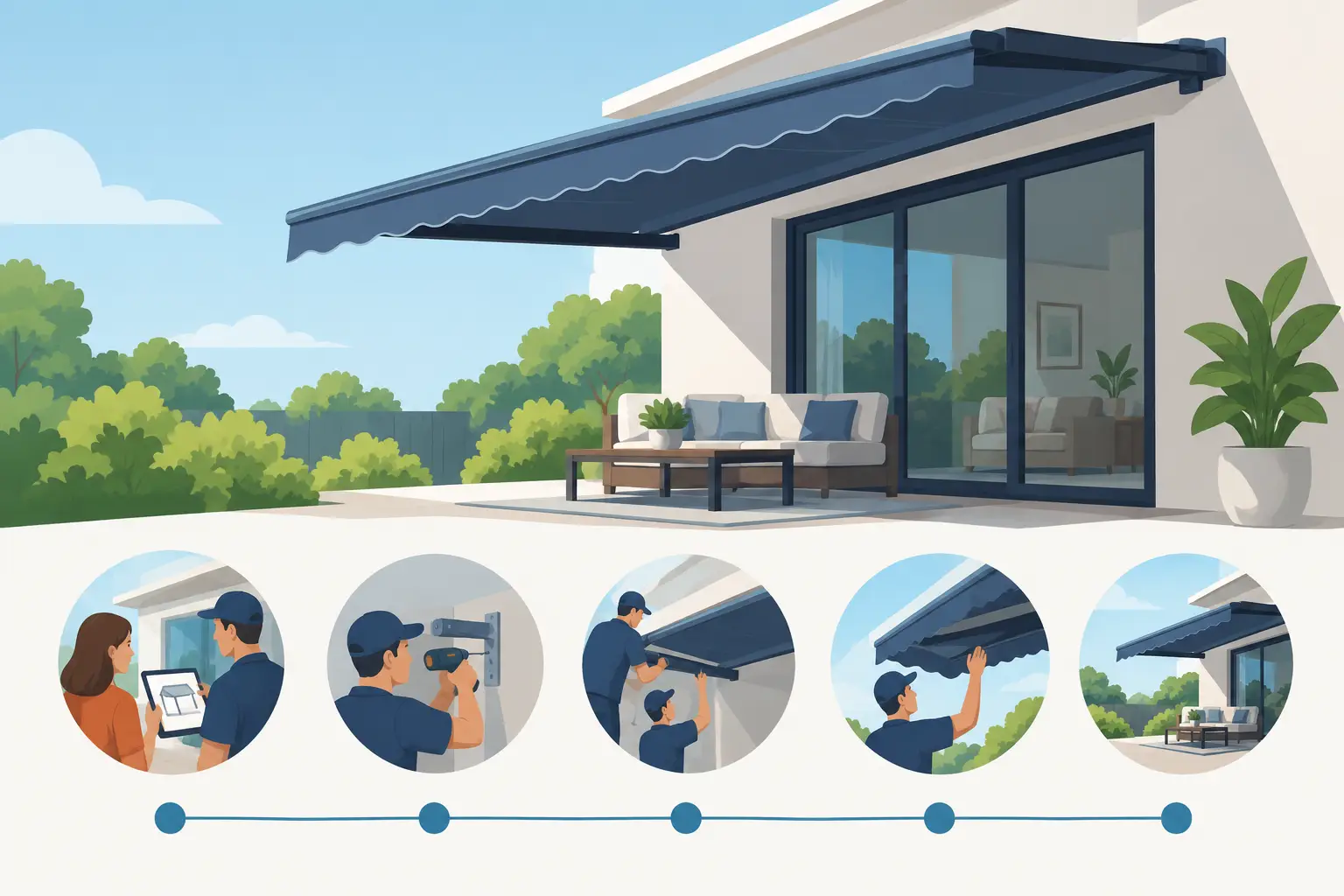
A custom awning project usually performs better than an off-the-shelf solution for one reason – it is built around the actual house. Windows are not always perfectly uniform, trim details vary, and siding conditions can affect how the awning should be mounted.
That matters for both appearance and function. A well-installed awning sits cleanly, drains properly, and feels like part of the home rather than an add-on. Poor fit can lead to uneven lines, weak support, and a finished look that falls short even if the materials are decent.
Professional installation also helps avoid common mistakes. Mounting location, projection, pitch, and attachment method all affect how the awning handles rain and sun. If those details are off, the awning may not provide the protection you expected.
For homeowners who want the project handled without guesswork, working with an experienced local contractor makes a real difference. May Awning & Patio has spent decades designing and installing exterior shade and weather-protection solutions that are made to perform in Northwest conditions, and that kind of experience tends to show in the finished result.
Window awnings and energy savings
Most homeowners start with comfort, but energy efficiency often becomes part of the conversation. If a room heats up every summer afternoon, your cooling system has to work harder to keep up. Exterior shade can help reduce that load.
The exact savings depend on the window size, orientation, glass type, insulation, and how much direct sun the home gets. So no responsible contractor should promise the same result for every property. Still, the basic principle is straightforward: blocking solar heat before it enters through the window is more effective than trying to remove that heat after it is already inside.
That can be especially helpful in upstairs rooms, bonus rooms, and large front windows where heat buildup becomes noticeable fast. Even when the goal is not major energy reduction, many homeowners appreciate the more stable indoor temperature and reduced glare.
Repair, replacement, or new installation?
Sometimes homeowners are not starting from scratch. They may already have an older awning that is faded, damaged, loose, or simply no longer fits the look of the home. In those cases, the right move depends on condition.
If the frame is sound and the issue is limited, repair may make sense. If the system is outdated, worn through, or poorly sized from the beginning, replacement often delivers better long-term value. There is no benefit in putting money into a setup that still will not perform the way you need it to.
An honest assessment helps here. The goal should not be to sell more work than necessary. It should be to recommend the option that gives the homeowner the best mix of durability, appearance, and value over time.
Why local experience matters in Portland and Vancouver
Homes in this region need exterior improvements that can handle more than one season well. Summer sun is real, but so is the steady wet weather that can expose weak installation practices and low-grade materials. What works in a dry climate does not always translate here.
That is why local experience matters. A contractor who understands the Portland and Vancouver market knows how homes are built, what weather patterns are typical, and what homeowners expect from a long-term investment. They also understand that appearance matters just as much as performance. People want protection from the elements, but they also want the finished work to improve the look and value of the property.
Awnings are one of those upgrades that can feel modest at first glance, yet make a daily difference once they are in place. A hot room becomes more comfortable. A rain-exposed window gets more protection. A plain exterior gains definition and character.
The best projects usually start the same way – with a clear look at the home, the problem areas, and the style that fits. From there, the right awning is not just an accessory. It becomes a practical improvement you notice every time the sun hits the glass or the weather turns, which is exactly how a good home upgrade should earn its place.

Related Posts
Comments (0)