
Patio room additions bring shade, rain protection, and flexible living space to Portland and Vancouver homes. See how to plan a durable, custom design.
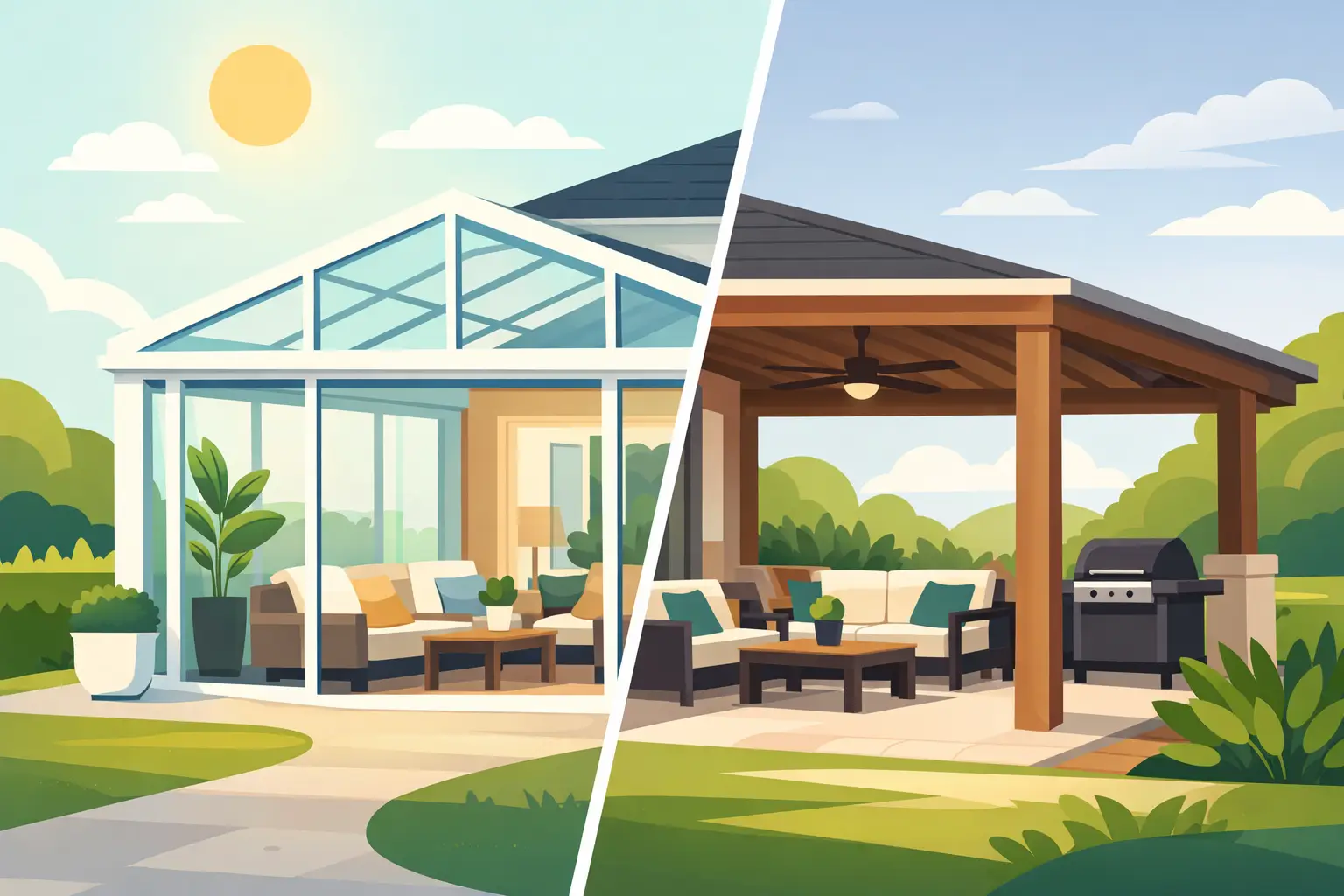
Sunroom vs Covered Patio: Which Fits Best?
A backyard can look perfect on paper and still go unused nine months out of the year. Around Portland and Vancouver, that usually comes down to one thing: weather. If you’re weighing a sunroom vs covered patio, the real question is not which one looks better in a photo. It’s which one will give you the kind of comfort, protection, and day-to-day use you actually want.
Both options add value in different ways. Both can make your home more enjoyable. But they solve different problems, and choosing the right one depends on how you live, how much weather protection you need, and how you want the space to function over time.
Sunroom vs covered patio: the biggest difference
The simplest way to think about it is this: a covered patio protects an outdoor space, while a sunroom creates a more enclosed living area. That difference affects everything from cost to comfort to how often you’ll use the space in January.
A covered patio gives you a roof overhead and open-air enjoyment underneath. It helps block rain, reduces direct sun exposure, and makes your patio more comfortable for dining, relaxing, or entertaining. You still get fresh air, and you still feel connected to the outdoors.
A sunroom goes further. It encloses the space with glass or window systems, creating a room-like environment that offers much more protection from wind, rain, and temperature swings. You keep the natural light, but you gain more control over the environment.
For many homeowners, that’s the fork in the road. Do you want a better outdoor area, or do you want a bright indoor-outdoor room?
When a covered patio makes more sense
A covered patio is often the better fit when your main goal is to use your backyard more often without turning it into a full enclosed addition. In the Pacific Northwest, that can be a smart move. A quality patio cover gives you a dry place to sit during light rain, shields patio furniture from constant weather exposure, and makes summer afternoons much more comfortable.
This option works especially well if you already enjoy being outside and just need better protection. Maybe your existing patio is too hot in direct sun. Maybe your grill area becomes unusable in drizzle. Maybe your family wants to sit outside longer in spring and fall without feeling like the weather is calling the shots.
A covered patio is also usually more budget-friendly than a sunroom. Because it is a simpler structure, installation is generally faster and less disruptive. For homeowners who want a practical improvement with immediate results, that matters.
There is a trade-off, of course. A covered patio still leaves you exposed to cold air, blowing rain, and seasonal temperature changes. On a damp November evening, you may still decide to stay inside.
Best uses for a covered patio
Covered patios tend to be ideal for outdoor dining, lounging, grilling, and casual entertaining. They are also a strong choice for homeowners who want shade and rain protection without closing off their yard or changing the feel of their home too dramatically.
In many Portland and Vancouver neighborhoods, a patio cover also feels visually natural. It extends the home while keeping that open, outdoor character people want from a backyard.
When a sunroom is worth the investment
If you want a space that feels usable far beyond the dry season, a sunroom starts to look very appealing. This is the choice for homeowners who want more than overhead coverage. They want shelter from wind, rain, pollen, and cooler temperatures, while still enjoying daylight and views of the yard.
A sunroom can function almost like a bonus room, depending on its design. It can become a reading room, a plant room, a sitting area, a hobby space, or a place to enjoy morning coffee without checking the forecast first. That extra layer of enclosure changes how often the space gets used.
This can be especially valuable in the Northwest. Long gray stretches are easier to live with when you have a bright space that feels connected to the outdoors without fully exposing you to the elements.
Still, a sunroom is a bigger commitment. It typically costs more than a covered patio, takes more planning, and may involve more structural considerations. It also shifts the look and feel of your home more noticeably than a patio cover does.
Best uses for a sunroom
A sunroom is often the right fit for homeowners who want year-round enjoyment, a more finished extension of the home, or a protected space that serves a specific daily purpose. If you know you will use the room regularly and not just occasionally, the higher investment can make sense.
It is also a strong option for homeowners who value light but want to reduce exposure to wind and rain. In that way, a sunroom gives you some of the benefits of outdoor living with much more comfort.
Cost, maintenance, and long-term value
For most homeowners, the decision is not just about lifestyle. It is also about budget and upkeep.
A covered patio usually has the lower upfront cost. It delivers meaningful functional value without the complexity of a fully enclosed space. Maintenance is often straightforward, especially when built with durable materials designed for wet climates. If your goal is to improve backyard usability and weather protection without stretching the budget too far, this is often the practical winner.
A sunroom costs more, but it may offer a different kind of return. Because it feels more like an extension of the home, some homeowners see stronger daily use and more perceived livable value. That said, the return depends on quality, design, and how well the room fits the house.
Maintenance can vary for either option. A covered patio may need periodic cleaning, inspections, and general upkeep to keep drainage and materials performing well. A sunroom adds glass, framing, seals, and more surfaces that need attention over time. Neither choice is maintenance-free, but both can be low-hassle when built well and designed for local conditions.
Which option handles Northwest weather better?
This is where local experience matters. In our region, rain is not a once-in-a-while inconvenience. It shapes how outdoor spaces get used.
A covered patio handles typical Northwest weather well when the goal is to stay drier and more comfortable outdoors. It gives you a dependable roofline and extends the usable season in a meaningful way. For many households, that is enough. They do not need four walls. They just need a better shield from drizzle and summer sun.
A sunroom offers a higher level of protection. If wind-driven rain, chilly evenings, and shoulder-season comfort are major concerns, a sunroom has the clear advantage. It creates a space you can count on more consistently, even when conditions are less inviting.
So which one handles the weather better? Strictly speaking, the sunroom. But the better question is whether you need that much protection. Many homeowners do not.
How to decide between a sunroom and covered patio
The best choice usually becomes clearer when you stop thinking about features and start thinking about habits. Picture how you want to use the space on an average week, not just during a perfect summer weekend.
If you want an outdoor area for dinners, family gatherings, and relaxing outside more often, a covered patio is often the right answer. It improves comfort, protects against rain and sun, and keeps the experience open and outdoorsy.
If you want a brighter room-like space that feels comfortable in more seasons and less dependent on the weather, a sunroom may be the better investment. It gives you more enclosure, more control, and more year-round consistency.
It also helps to think about your home’s architecture, your budget, and how much change you want to make. Some homeowners want a clean extension that blends naturally with the exterior. Others want to add a more distinct living space with a stronger sense of enclosure.
At May Awning & Patio, this is often where an on-site conversation makes the difference. What looks similar at first can lead to very different results once you factor in exposure, orientation, drainage, family use, and long-term goals.
A good project starts with the right expectations
There is no universal winner in the sunroom vs covered patio debate. One gives you open-air comfort with practical protection. The other gives you a more enclosed space with greater all-weather use. The right answer depends on whether you want to upgrade your outdoor living or create something closer to a new room.
If you’re honest about how you want to live in the space, the decision usually gets easier. The best result is not the one with the most features. It is the one that fits your home, your climate, and the way you actually spend your time.

Related Posts
Comments (0)