
Compare the best carport designs for homes, from attached covers to freestanding structures, with practical tips for Pacific Northwest weather and style.

Window Awnings for Heat Reduction That Work
When a west-facing room turns hot by late afternoon, the problem is usually not your air conditioner. It is the sun beating directly through the glass. Window awnings for heat reduction work by stopping a large share of that solar heat before it ever reaches the window, which is exactly where many homeowners start to feel the difference.
That matters in the Portland and Vancouver area more than people sometimes expect. Our climate is not desert-hot for months on end, but we do get long summer days, bright afternoon exposure, and heat waves that make certain rooms uncomfortable fast. Add large windows, older glass, or a home with limited tree cover, and indoor temperatures can climb quickly even when the weather outside seems moderate.
Why window awnings for heat reduction make a real difference
The basic idea is simple. Sunlight that hits your window turns into heat indoors. Once that heat passes through the glass, your cooling system has to work harder to remove it. An awning helps by shading the window from above and reducing direct sun exposure during the hottest parts of the day.
This is one of the main reasons exterior shading tends to outperform interior solutions for heat control. Blinds and curtains can darken a room, but they do not stop the sun until after it has already reached the glass. By then, much of the heat gain has already started. An exterior awning blocks that process earlier.
Homeowners usually notice three benefits right away. Rooms feel cooler, glare on screens is reduced, and the indoor light becomes softer and easier to live with. The longer-term benefit is lower strain on your air conditioning system, which may help reduce energy costs over time.
That said, results depend on placement. A north-facing window may not need much protection, while a west-facing window often benefits the most. South-facing windows can also be excellent candidates, especially when the summer sun hits hard for several hours each day.
What affects heat reduction the most
Not every awning performs the same way. If your goal is serious heat control rather than just curb appeal, the design choices matter.
Window orientation
This is usually the first thing to evaluate. West-facing windows tend to create the biggest comfort complaints because they collect strong afternoon sun when the outdoor temperature is already high. East-facing windows can heat up bedrooms and kitchens early in the day. South-facing windows often get consistent exposure and can benefit from well-sized shade. North-facing windows usually have the least solar heat gain.
Awning projection and coverage
A shallow awning may look nice but leave too much of the glass exposed during peak sun angles. A deeper projection can create noticeably better shade coverage, especially on taller windows. Width matters too. If the awning is too narrow, sunlight can still enter from the sides depending on the time of day.
This is where custom sizing becomes important. A one-size-fits-all product may not match the actual heat problem you are trying to solve. Proper measurements and site conditions make a difference.
Fabric or metal choice
Both can be effective, but they perform differently. Fabric awnings often offer a softer appearance and a wide range of colors and patterns. They can be a strong fit for residential homes where appearance matters as much as performance. Metal awnings tend to deliver a more permanent, low-maintenance solution and can be especially appealing for homeowners who want durability and a clean architectural look.
The right choice depends on your home style, your budget, and how much ongoing maintenance you want. It also depends on weather exposure. In the Pacific Northwest, products need to hold up well through rain as well as summer sun.
Fixed versus retractable design
For most window applications, fixed awnings are a practical choice because they provide shade consistently and require very little user involvement. Retractable options can offer flexibility, but they are not always necessary for a standard window heat-control project.
If your main concern is keeping a room cooler every sunny afternoon, a fixed awning often makes the most sense. If you want occasional full sun in cooler months, then it may be worth discussing whether adjustability matters for your specific windows.
Where homeowners usually feel the biggest payoff
Some windows are obvious candidates. Others are easy to overlook until you connect them with a room that never seems comfortable.
Living rooms with large picture windows are common trouble spots because they combine lots of glass with long afternoon exposure. Bedrooms on the sunny side of the house can get too warm by evening, which affects sleep more than people realize. Kitchens also benefit because cooking already adds heat indoors, and direct sun only makes the room harder to manage.
Second-story rooms can be especially challenging. Heat rises, rooflines can reflect warmth, and upper windows often receive stronger light with less surrounding shade. In those areas, adding exterior protection can change the room from something you avoid in summer to a space you actually use.
Light commercial properties see similar benefits. Office windows, waiting areas, and storefronts can become uncomfortable for staff and customers when direct sun creates hot spots and glare. In those settings, heat reduction also supports a more consistent indoor environment without overworking the HVAC system.
Heat reduction is not the only reason people choose awnings
Most homeowners start with comfort, but they end up appreciating several side benefits. Furniture, flooring, and window treatments often fade more slowly when harsh direct sun is reduced. Television and computer screens are easier to see. And from the outside, a well-designed awning adds depth and character to the home rather than looking like an afterthought.
There is also the issue of daily livability. Some rooms get labeled as “too hot in summer” and gradually become underused. Solving that problem is not just about utility bills. It is about making more of your home feel usable, comfortable, and finished.
Choosing window awnings for heat reduction in the Northwest
Homes in this region need products that can handle more than sun. They also need to hold up through wet weather, changing seasons, and the kind of maintenance expectations real homeowners have.
That is why material quality, installation quality, and fit are just as important as appearance. A poorly fitted awning may not shade the window properly. A cheaply made product may fade, loosen, or wear out sooner than expected. And a rushed installation can create problems that show up later.
Working with an experienced local contractor helps because the recommendation should be based on your actual home, not just a catalog photo. Roof overhangs, siding type, window size, exposure, and architectural style all affect what will work best. A good on-site consultation should account for those details and explain the trade-offs clearly.
For example, deeper shade may improve heat control but change the amount of daylight you get indoors. A metal system may last longer with less upkeep, while fabric may offer more design flexibility. Neither option is automatically right for every house.
What to expect from a custom awning project
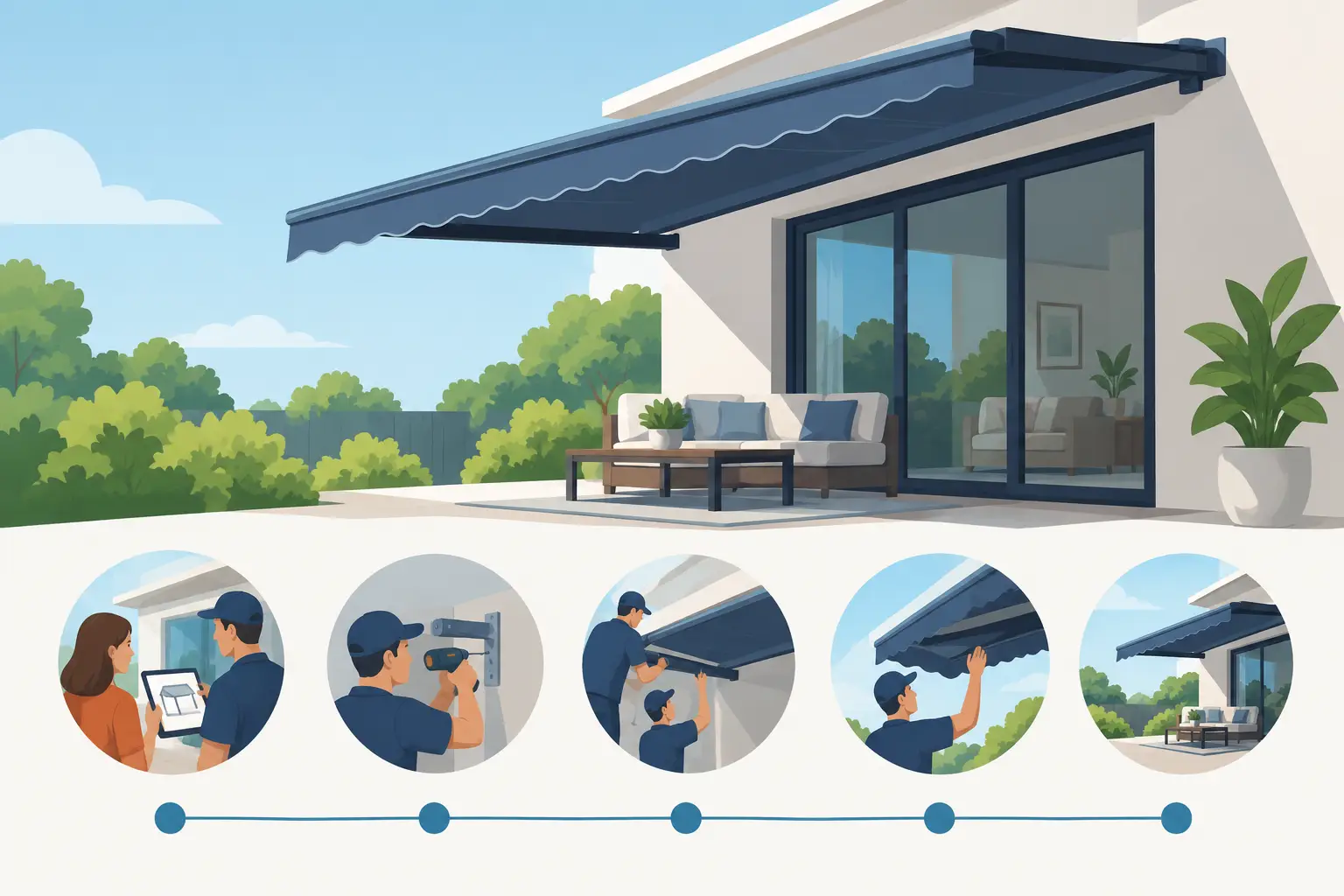
A quality project usually starts with identifying which windows are causing the problem and when. Morning sun and afternoon sun behave differently. So do shaded lots versus open properties. The best results come from matching the awning design to those conditions instead of simply covering every window the same way.
From there, measurements, materials, color choices, and mounting details should all support the same goal: better shade, better comfort, and a finished look that fits the home. If you are planning multiple exterior upgrades, window awnings can also be designed to complement patio covers, door awnings, or other shade structures so the overall appearance feels intentional.
For homeowners who want a dependable contractor, this is where experience shows. A company like May Awning & Patio understands that performance matters, but so does long-term reliability. Fast installation is valuable, but only if the finished product is built to last and backed by workmanship you can trust.
The best home improvements are not always the flashiest ones. Sometimes they are the upgrades that quietly solve an everyday problem. If one or two rooms always overheat when the sun is out, the right awning can make your home feel more comfortable every single summer afternoon.

Related Posts
Comments (0)