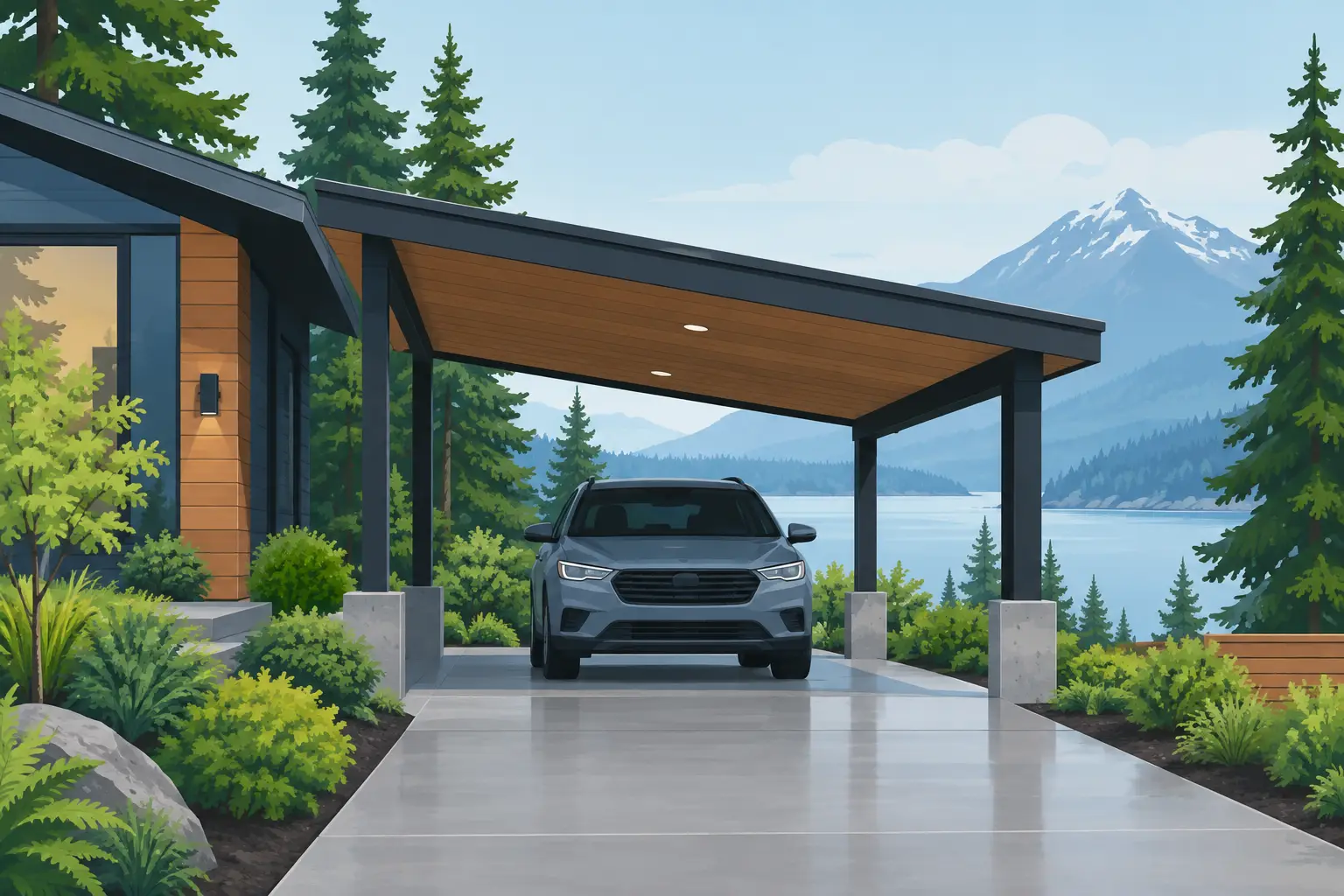
Compare the best carport designs for homes, from attached covers to freestanding structures, with practical tips for Pacific Northwest weather and style.

What to Expect From an Onsite Awning Consultation
The wrong awning usually looks fine on paper. Then it goes up, and the projection is too short, the style fights the house, or it blocks less rain than you expected. That is why an onsite awning consultation matters. Seeing the space in person is often the difference between a basic shade product and a finished result that actually works for your home, your weather exposure, and the way you use the space.
For homeowners in the Portland and Vancouver area, that in-person step is even more valuable. Our weather is not one-note. You may want relief from direct summer sun, but you also need protection from steady rain, damp conditions, and seasonal debris. A good consultation is not just about picking a color or deciding between fixed and retractable. It is about understanding how the structure will perform month after month.
Why an onsite awning consultation saves time later
A lot of awning problems start with assumptions. A homeowner estimates the width from memory, chooses a style online, or focuses on price before anyone has looked at the wall, trim, siding, drainage, or sun angle. That can lead to delays, change orders, or a design that never quite feels right.
An onsite awning consultation helps prevent that. The consultant can measure accurately, evaluate mounting conditions, and spot issues that are easy to miss in photos. That includes things like gutter placement, door swing clearance, uneven surfaces, electrical lines, window height, and how much exposure the area gets at different times of day.
It also gives you a chance to talk through goals that are hard to capture in a form. Some homeowners want cooler indoor temperatures. Others want to cover a back patio so they can grill in light rain, protect a front entry, or reduce glare through west-facing windows. The right solution depends on the real use case, not just the dimensions.
What happens during an onsite awning consultation
Most consultations begin with a walk-through of the area you want to improve. That could be a patio, deck, front entry, side door, or window line. The consultant looks at the structure itself, but also at the home around it. Roofline, siding type, drainage, trim detail, and architectural style all affect what will look right and what will hold up well.
Measurements come next, and they need to be exact. Width, height, projection, mounting surface, and clearance all matter. In some cases, there are easy answers. In others, there are trade-offs. A deeper projection may provide better shade but require different support or mounting. A wider awning may cover more area but need to work around lights, gutters, or windows.
This is also when design options become more practical. Instead of guessing from a catalog, you can discuss whether a window awning, door awning, patio cover, or other shade structure makes the most sense for the property. You can compare materials, profiles, colors, and finishes in a way that fits the home rather than chasing a trend.
Onsite awning consultation for design and fit
The best awning projects do not feel added on. They feel like they belong there. That is one reason an onsite awning consultation is so helpful. Proportion and placement are easier to judge in person than on a screen.
A consultant can help you think through scale. A small awning over a large patio opening may look undersized and perform poorly. An oversized unit may overpower the front elevation or reduce natural light more than you want. With a window awning, even a few inches can change how much shade you get inside and how the awning lines up with trim.
Fit is not only visual. It is structural. Different homes require different attachment methods, and Pacific Northwest weather makes that especially important. Rain load, wind exposure, and long-term moisture all affect what materials and installation methods make sense. A design that works in a dry climate may not be the best match here.
Questions you should ask during the visit
A consultation should feel informative, not pressured. If you are meeting with a contractor, this is the time to ask direct questions about performance, durability, and installation.
Ask what product type fits your goal best and why. Ask how the awning will be mounted, what materials are recommended for your location, and how the design handles rain as well as sun. If you are comparing options, ask about maintenance, lifespan, warranty coverage, and whether the appearance will stay consistent over time.
You should also ask about timing. Custom work takes planning, and a reliable contractor should be clear about the process from estimate to fabrication to installation. If there are variables, such as special-order materials or structural adjustments, those should be discussed upfront.
What influences the final recommendation
Not every homeowner needs the same solution, even on similar houses. During an onsite awning consultation, several factors shape the recommendation.
Orientation is a big one. A west-facing patio may need stronger afternoon shade than a north-facing entry. Roof overhangs, tree coverage, and neighboring structures can change how much protection is already there. The amount of open exposure also affects whether a lighter awning approach is enough or if a more substantial cover would serve you better.
Budget matters too, and a good consultation respects that. Sometimes the ideal design and the most practical design are not identical. That does not mean settling for less. It means choosing the option that gives you the best long-term value for the way you actually use the space. For one home, that may be a custom door awning that protects the entry and reduces weather wear. For another, it may be a larger patio cover that turns a rarely used backyard area into everyday living space.
Why local experience makes a difference
Outdoor structures are never one-size-fits-all, and regional experience matters more than many homeowners realize. In the Portland and Vancouver market, rain protection, drainage, material durability, and year-round use are part of the conversation from the start.
That is where a long-established local contractor has an advantage. A company that has spent decades designing and installing awnings in this climate understands what tends to hold up, what tends to create service issues, and how to guide homeowners toward better choices. May Awning & Patio has built that kind of reputation by focusing on practical design, quality workmanship, and dependable service over the long haul.
There is also peace of mind in working with a contractor who will still be here after the installation is done. For custom exterior work, accountability matters. So do clear estimates, reliable scheduling, and warranties that mean something when years pass.
After the consultation
Once the site visit is complete, you should have more than a rough idea and a price range. You should understand what is being recommended, why it fits your home, and what the next steps look like. That includes product details, sizing, materials, installation approach, and expected timeline.
If the consultation was thorough, decision-making gets easier. You are no longer comparing abstract options. You are reviewing a solution built around your property, your goals, and your budget. That usually leads to better confidence and fewer surprises later.
A well-done awning project starts before any materials are ordered. It starts with someone standing in the space, taking the time to evaluate it properly, and giving you honest guidance based on experience. If you want an outdoor improvement that looks right, performs well, and holds up to Northwest weather, that first conversation on site is time well spent.

Related Posts
Comments (0)