
Compare the best carport designs for homes, from attached covers to freestanding structures, with practical tips for Pacific Northwest weather and style.
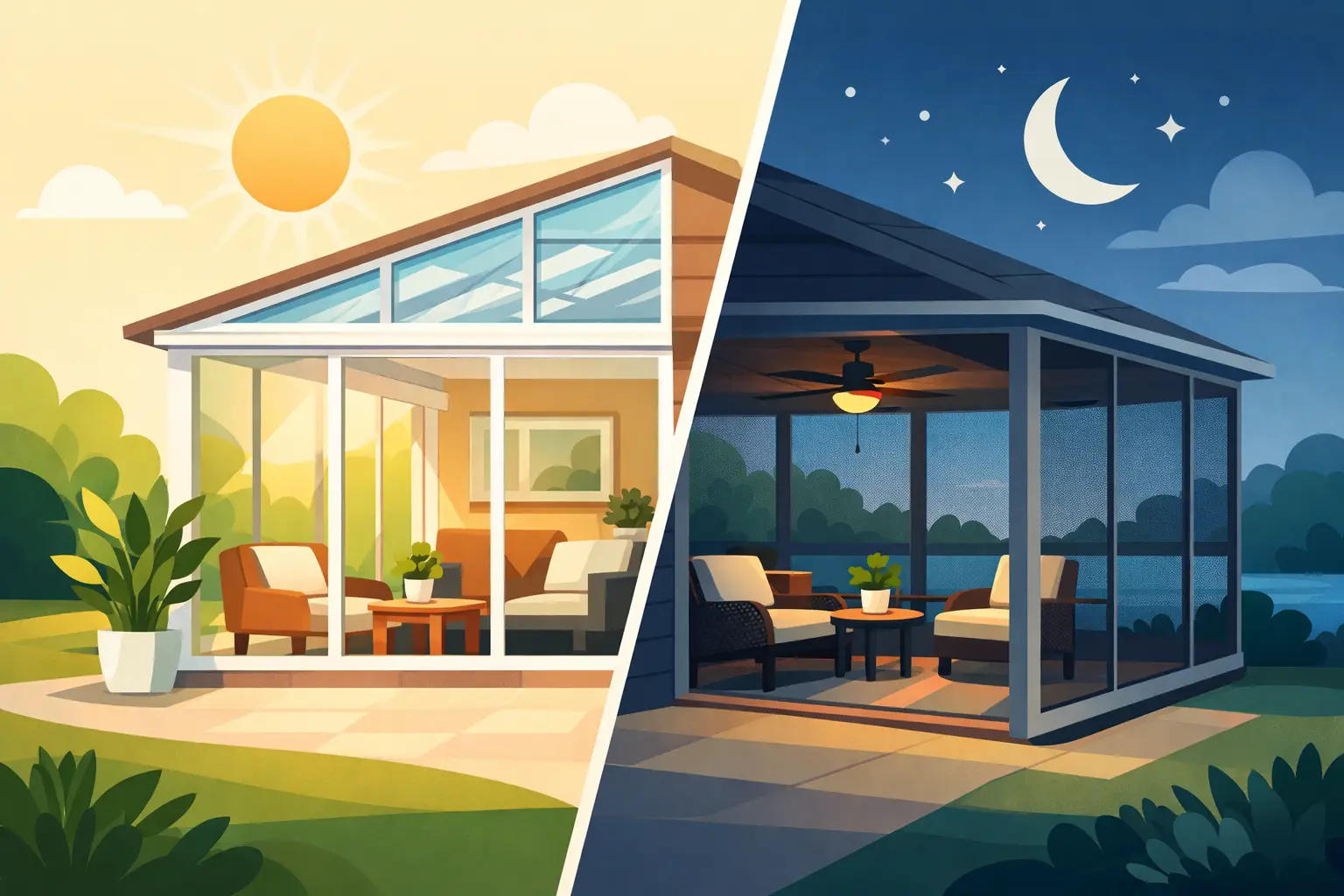
Sunroom vs Screen Room: Which Fits Best?
A lot of homeowners start with the same question after one more rainy weekend or one more stretch of summer glare – should this space become a sunroom or a screen room? When you compare sunroom vs screen room, the right answer usually comes down to how you want to use the space in Portland and Vancouver weather, how much protection you need, and how much value you want to add year-round.
Both options improve comfort. Both can make your backyard feel more usable. But they are not interchangeable, especially in the Pacific Northwest, where a beautiful afternoon can turn cool and wet faster than expected.
Sunroom vs Screen Room: The Core Difference
A sunroom is a more enclosed, weather-protected addition. It typically uses solid framing, insulated or glass wall systems, and windows that let in light while blocking rain, wind, and debris. It feels closer to an interior living space, even if it still keeps you connected to the outdoors.
A screen room is more open. It uses screened wall panels to allow airflow while keeping out many insects and some yard debris. You still get a covered outdoor feel, but without the same level of temperature control or protection from wind-driven rain.
That basic difference affects everything else – cost, comfort, maintenance, season of use, and how often the room becomes part of your daily routine instead of an occasional extra.
How Each Space Feels Day to Day
The biggest mistake homeowners make is comparing only appearance. A sunroom and a screen room may both look attractive from the yard, but they live very differently.
A sunroom tends to become an everyday room. People use it for morning coffee, reading, plants, hobbies, casual dining, and extra sitting space across much more of the year. It works well for homeowners who want natural light without giving up shelter. If you like the idea of enjoying your backyard in March, October, or during a light rain, a sunroom is usually the stronger fit.
A screen room feels more seasonal and more outdoorsy. It is great for homeowners who mainly want shade, breeze, and bug protection in fair weather. On the right day, a screen room can be perfect. It gives you a comfortable place to relax without feeling boxed in. But when temperatures drop or the wind picks up, that open-air quality can work against you.
That is why lifestyle matters more than labels. If you want a room that extends your living area, a sunroom usually wins. If you want a protected patio experience that still feels like being outside, a screen room may be enough.
Weather Matters More in the Northwest
In some climates, a screen room is an easy choice because warm, dry evenings are common. Around Portland and Vancouver, weather shifts are part of the equation.
Rain is not rare here. Cool mornings and shoulder-season dampness are normal. That makes full enclosure much more valuable than many homeowners expect at the start of the project. A screen room can still provide welcome shade and airflow in summer, but it will not stop mist, cold wind, or sideways rain the way a sunroom can.
This is where local design experience matters. A structure that looks good on paper still has to perform in real weather. Materials, roof style, drainage, framing, and how the room integrates with the home all affect long-term comfort.
Cost: Upfront Price vs Long-Term Use
For most families, budget is part of the decision. A screen room usually costs less upfront because it uses simpler materials and requires less enclosure work than a sunroom. If you want to improve your patio without taking on a larger project, that lower entry point can make sense.
A sunroom costs more because it is a more substantial addition. You are paying for a stronger enclosure, more finished appearance, and greater weather protection. Depending on the design, you may also be investing in better insulation, window systems, and a more integrated extension of the home.
But upfront cost is only part of the picture. The better question is how often you will use the room. A less expensive space that sits empty for much of the year can feel like a compromise later. A larger investment that gives you daily use, better comfort, and stronger resale appeal may offer better value over time.
There is no universal right answer here. It depends on your goals, your home, and whether you are solving for seasonal enjoyment or year-round function.
Comfort and Energy Considerations
A sunroom offers better control. It blocks wind and rain, helps reduce outdoor debris, and creates a more stable environment. That matters if you want the space to stay cleaner, feel calmer, and support longer use through changing seasons.
It can also support energy-related goals, depending on design. When planned well, a sunroom can bring in natural light and help create a more comfortable transition space off the home. The details matter, though. Too much glass in the wrong orientation can create heat gain, while the right materials and layout can improve comfort significantly.
A screen room does not try to do the same job. Its strength is ventilation. On warm days, that natural airflow can feel excellent. If your main frustration is direct sun, bugs, or lack of a shaded outdoor sitting area, a screen room may solve the problem without the added complexity of a fully enclosed build.
Maintenance and Durability
Both options need quality construction, but maintenance expectations are different.
A screen room has fewer enclosed surfaces, which can simplify some aspects of upkeep. At the same time, screens can be damaged, loosen over time, or collect pollen and debris. Because the space stays open to humidity and wind, furniture and finishes inside may also take more wear.
A sunroom protects the interior better, but it also includes more components that should be built and installed correctly from the start. Windows, framing, roofing connections, and seals all need attention to detail. Done well, that added protection often translates to easier day-to-day care and a more finished look over the long run.
For homeowners who want low-stress ownership, craftsmanship matters as much as product choice. A properly designed structure with durable materials will nearly always outperform a cheaper shortcut.
Which Adds More Home Value?
In a straight sunroom vs screen room comparison, a sunroom usually has the edge in perceived value because it feels more like an extension of the house. Buyers tend to respond well to spaces that offer flexibility, weather protection, and a more complete appearance.
A screen room still adds appeal, especially for homeowners who prioritize outdoor living. It can improve the usefulness and enjoyment of a backyard and make a patio far more inviting. But from a resale perspective, it is often seen as a lighter upgrade.
That said, value is not only about resale. If a screen room gives your family exactly what you need at the right price, that practical fit matters. The best investment is often the one you will truly use.
How to Choose Between a Sunroom and a Screen Room
Start with a simple question: do you want an outdoor room, or do you want a room with an outdoor feel?
If you want protection from rain, more months of use, cleaner conditions, and a space that feels integrated with the home, lean toward a sunroom. If you mainly want shade, airflow, and a more comfortable place to sit outside during good weather, a screen room may be the better match.
Also think about your habits. Are you the kind of homeowner who will use the space on cool mornings, during spring drizzle, or late into fall? Or are you mostly looking for a pleasant summer retreat? Your answer tells you a lot.
Home layout matters too. Some patios naturally support one option better than the other based on roofline, orientation, drainage, and how the structure connects to existing architecture. That is one reason many homeowners benefit from an on-site consultation before settling on a design.
For families in the Portland and Vancouver area, we often find that weather protection becomes more important the longer they think through how they want to use the space. A room that looks beautiful in July should still feel worth having in October.
A good project does more than fill empty square footage. It should make your home more comfortable, more functional, and easier to enjoy in the conditions you actually live in. If you keep that standard in mind, the right choice between a sunroom and screen room usually becomes clear.

Related Posts
Comments (0)