
Patio room additions bring shade, rain protection, and flexible living space to Portland and Vancouver homes. See how to plan a durable, custom design.
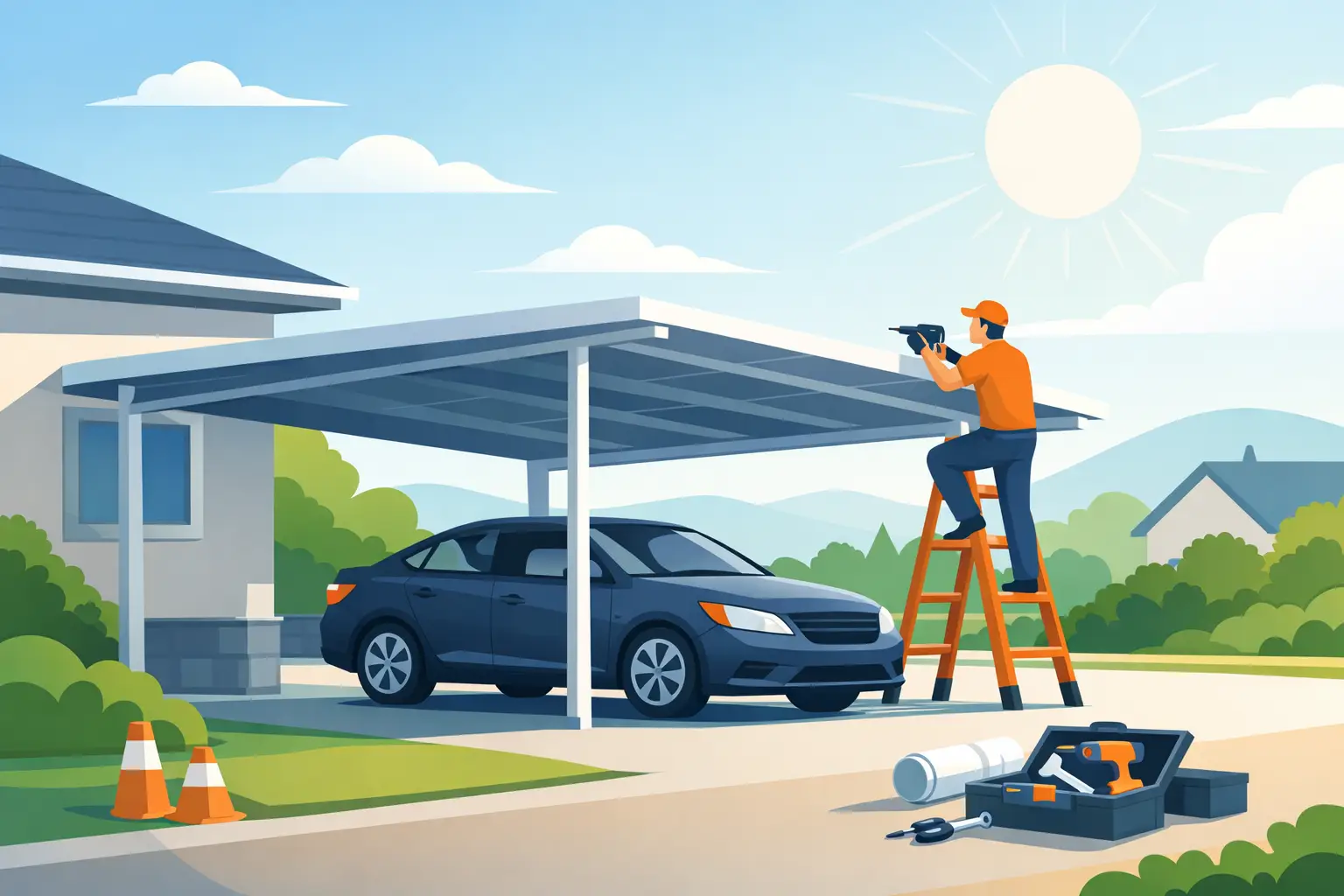
Carport Cover Installation Done Right
A carport that puddles, rattles, or leaves your vehicle half exposed is not doing its job. Good carport cover installation should give you reliable protection from rain, sun, and debris without looking like an afterthought attached to your home.
In the Portland and Vancouver area, that matters more than most places. We get long wet seasons, occasional wind, and enough summer sun to make an uncovered vehicle or entry area noticeably hotter. A properly built cover helps protect cars, trucks, RVs, and even multi-use outdoor spaces, but the result depends on more than just putting a roof overhead. Design, materials, attachment points, drainage, and installation quality all play a part.
Why carport cover installation matters in the Northwest
A carport cover is often seen as a simple upgrade, but it solves several practical problems at once. It reduces direct weather exposure, helps preserve exterior finishes on vehicles, and makes day-to-day life easier when you are loading groceries, getting kids in the car, or walking out the door in the rain.
In the Pacific Northwest, the bigger issue is consistency. A cover has to perform month after month through steady moisture, leaf buildup, and temperature swings. That is why custom planning matters. A one-size-fits-all structure may look acceptable at first, but if the roof pitch is wrong or runoff is not managed well, small issues can turn into leaks, staining, or premature wear.
A professionally installed carport cover also needs to fit the home around it. Proportion, color, trim details, and roof style all affect curb appeal. The best projects feel like they belong there from the start, not like a temporary fix.
What to plan before carport cover installation
The first step is not picking a panel color. It is understanding how the space will be used. Some homeowners need basic vehicle coverage. Others want room for larger trucks, side clearance for doors, or enough overhead height for a lifted vehicle, boat, or RV. The structure should be sized around real use, not just the footprint available on paper.
Placement is just as important. A freestanding cover has different requirements than one attached to a home or garage. The slope of the site, the direction of rainfall, and nearby windows or walkways all influence the design. In many cases, the right location improves more than parking. It can create a drier path to the house, protect adjacent concrete, and make the whole exterior feel more functional.
Then there is the question of local code and structural requirements. Homeowners often underestimate this part. Posts, footings, attachment hardware, and load calculations matter, especially in areas with wet weather and seasonal wind. Fast, reliable installation starts with careful preparation, not skipped steps.
Size, clearance, and access
One of the most common mistakes in carport planning is building too small. A narrow cover may technically fit a vehicle but still make it awkward to park, open doors, or move around comfortably. If the structure is intended for long-term use, a little extra width can make a major difference.
Height deserves the same attention. Standard passenger vehicles have different needs than oversized trucks or recreational vehicles. Overhead clearance should account for mirrors, racks, and future vehicle changes, not only what is parked there today.
Drainage and roof pitch
In this region, water management is not optional. The roof needs enough pitch to move water efficiently, and runoff should be directed away from foundations, walkways, and planting areas. If drainage is ignored, even a sturdy cover can create new headaches.
A well-designed system protects more than the vehicle underneath. It helps keep surrounding surfaces cleaner, reduces splashback, and limits standing water that can shorten the life of nearby materials.
Choosing the right materials for long-term performance
Material choice affects appearance, maintenance, and lifespan. Aluminum remains a popular option because it is durable, lightweight, and well suited to wet climates. It resists many of the problems that affect lower-grade materials over time, and it can be fabricated in styles that complement both traditional and modern homes.
Insulated roof panels may be worth considering if heat control or noise reduction is a priority. They can help moderate temperature underneath the structure and create a more finished feel. For homeowners who use the space for more than parking, that added comfort can be a real advantage.
There are trade-offs, of course. Heavier-duty systems and upgraded finishes usually cost more upfront. But lower-cost materials can lead to more maintenance, shorter service life, or a less refined appearance. For many homeowners, the better value is not the cheapest option. It is the one that performs well for years with fewer problems.
Attached or freestanding: which works better?
This depends on the property. An attached carport cover can feel more integrated with the home and may offer better convenience for daily use. It often creates a smoother transition from the vehicle to the house, which is especially welcome on rainy mornings.
A freestanding structure can be the better choice when the home layout, roofline, or siding condition makes attachment less practical. It also offers flexibility in placement and may work better for detached parking areas, side yards, or larger vehicle storage.
Neither is automatically better. The right answer comes down to layout, structural conditions, aesthetic goals, and budget. A good on-site consultation helps sort that out quickly.
The value of professional carport cover installation
There is a reason experienced contractors spend time on measurements, layout, and site review. Carport cover installation is not just assembly. It is a structural project that needs to perform safely and look right.
Professional installation helps prevent common problems such as weak anchoring, uneven posts, poor roof alignment, and drainage issues. It also improves finish quality. Clean lines, tight connections, and proper trim details are what separate a cover that adds value from one that looks patched together.
For homeowners, there is also peace of mind in working with an established local company that understands regional weather and permitting expectations. In a market like Portland and Vancouver, local experience matters because the details that work in a dry climate do not always hold up here.
When a contractor offers custom design, quality workmanship, and dependable installation, the project tends to move more smoothly from estimate to completion. That means fewer surprises and a finished structure you can count on season after season.
What the installation process usually looks like
Most projects begin with an on-site visit to evaluate the space, discuss goals, and take accurate measurements. This is where real-world factors come into focus, including slope, access, existing structures, and how the cover should complement the home.
From there, the design is finalized based on size, style, materials, and support requirements. Once approvals and scheduling are in place, the site is prepared for posts, footings, and structural components. The roof system, trim, and any drainage elements are then installed and checked for fit and finish.
The timeline depends on the complexity of the project, but homeowners usually benefit most when the process is handled as a complete service rather than split between multiple vendors. A single team can keep details consistent from design through installation and reduce the chance of miscommunication.
Signs a custom solution is worth it
If your driveway slopes, your home has unusual rooflines, or you need the structure to serve more than one purpose, custom work is usually the better route. The same is true if appearance matters and you want the cover to match the character of the house.
Custom carport cover installation gives you better control over dimensions, color, support placement, and how the structure handles weather. It can also solve practical issues that off-the-shelf systems do not address well, such as narrow property lines, awkward access, or the need to preserve views and natural light.
That kind of planning is where a company with a long history in outdoor cover systems stands out. May Awning & Patio has spent decades helping local homeowners create durable, attractive weather protection built for Northwest conditions, and that experience shows in the finished work.
A carport cover should make your property easier to use every day. When it is designed well, built with durable materials, and installed by people who know the region, it does exactly that – quietly, reliably, and for a very long time.

Related Posts
Comments (0)