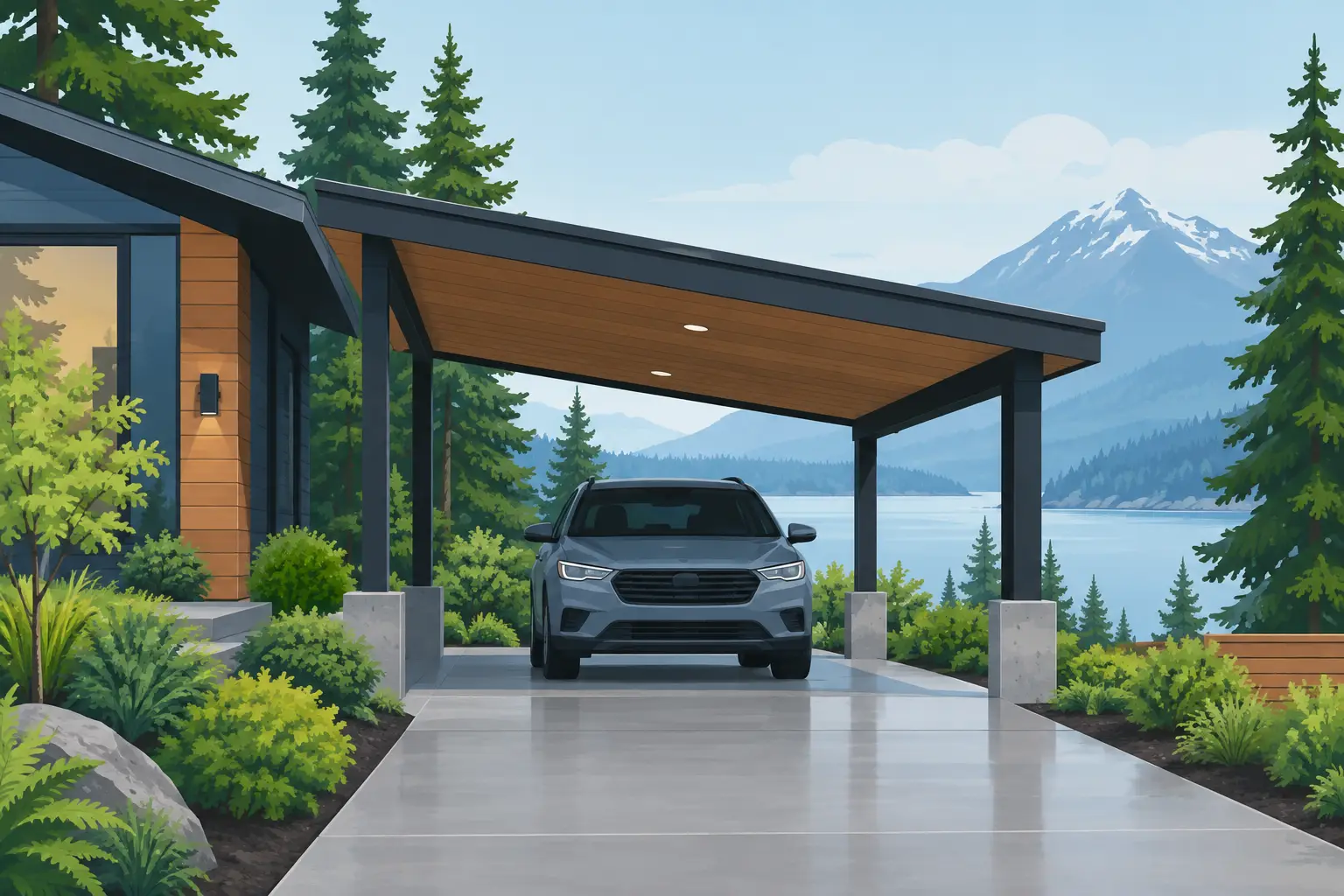
Compare the best carport designs for homes, from attached covers to freestanding structures, with practical tips for Pacific Northwest weather and style.
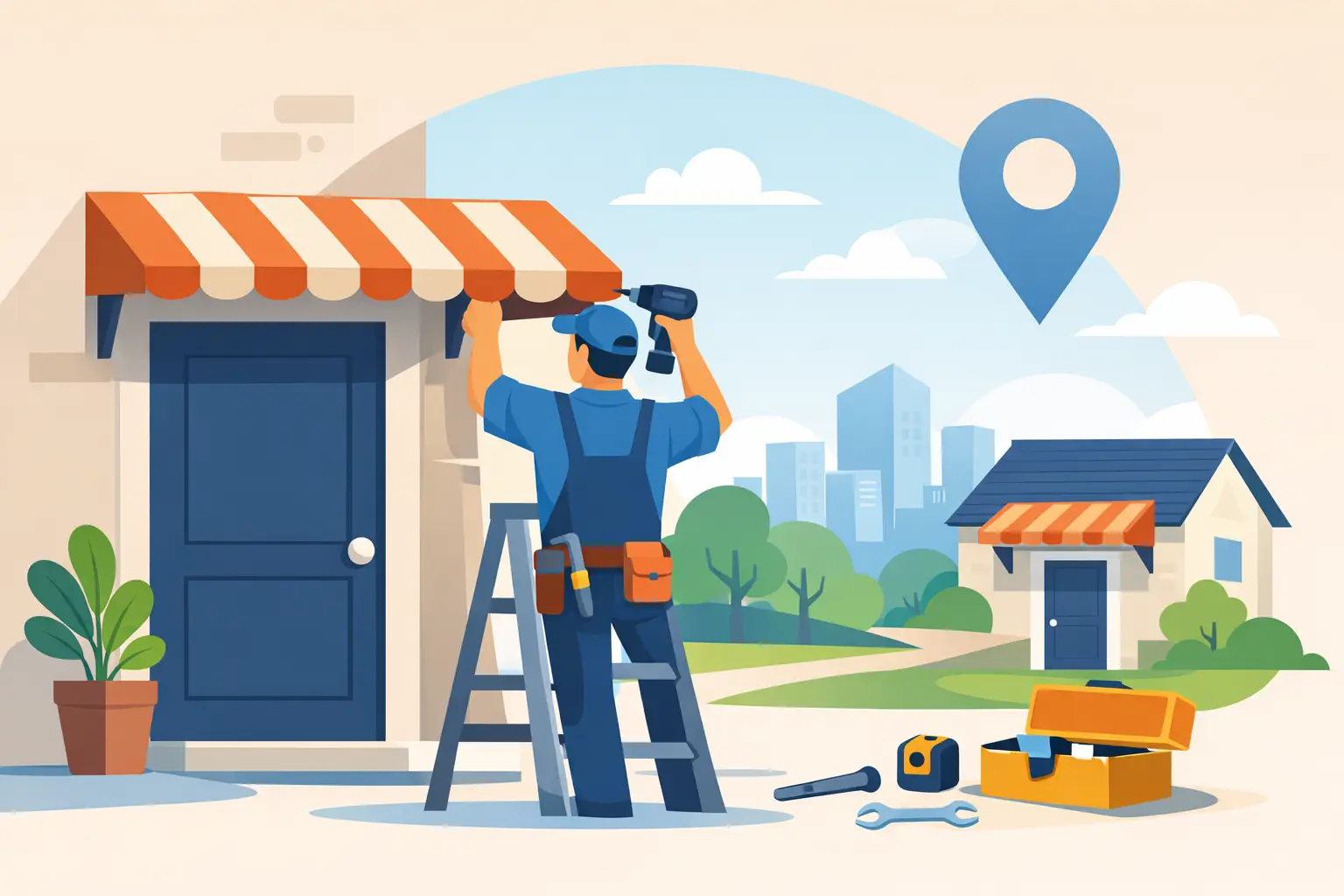
Door Awning Installation Near Me
When homeowners search for door awning installation near me, they usually have a very specific problem. Rain is dripping at the front entry, the porch feels unfinished, or the afternoon sun turns a back door into a hot spot. A well-built door awning fixes those issues quickly, but the right result depends on more than picking a color and scheduling a crew.
In the Portland and Vancouver area, a door awning has to do real work. It needs to handle steady rain, protect the doorway, and look like it belongs on the home instead of being added as an afterthought. That is why local installation matters. Good design, proper mounting, and durable materials all make the difference between an awning that performs for years and one that becomes a maintenance problem.
What a door awning actually does for your home
A door awning is a practical upgrade first, and a visual upgrade second. It helps shield entry doors from rain exposure, which can reduce wear on paint, trim, thresholds, and hardware. On doors with glass, it can also cut glare and reduce direct heat gain during the warmer months.
That protection changes how the entry feels day to day. Guests are not standing in the rain looking for keys. Packages are less exposed. Exterior finishes tend to last longer. Even a smaller awning can make an entry feel more complete and more comfortable.
For many homeowners, curb appeal is part of the decision too. A custom awning can add definition to a flat exterior and create a more finished, welcoming look. But appearance only works in your favor when the size, projection, shape, and color fit the house. A door awning that is too small can look decorative but fail to protect the opening. One that is oversized may dominate the facade.
Why local door awning installation near me matters
Not every installer builds for Pacific Northwest conditions. That matters more than many homeowners realize.
In this region, rain is not occasional. It is a long-season reality. Installers need to think about runoff, attachment points, water exposure on siding, and how the awning integrates with the structure of the home. Material choices that might hold up in a drier climate do not always perform the same way here.
Local experience also helps with design judgment. Homes in the Portland and Vancouver market vary widely, from mid-century ranches to newer craftsman builds and traditional two-story homes. The right awning should match the scale and character of the property, not fight against it.
There is also the service side. When you hire a nearby contractor, you are not just buying installation day. You are choosing who measures the project, who answers questions before the work starts, and who stands behind the finished product if adjustments or service are needed later.
How to choose the right door awning
The best door awning is not always the biggest one or the one with the most decorative detail. It is the one that fits the opening, complements the home, and provides meaningful coverage.
Start with purpose. If your goal is mainly rain protection for a front entry, the design should focus on projection and water shedding. If sun control matters just as much, orientation becomes part of the conversation. A west-facing door may need a different solution than a north-facing one.
Material selection matters too. Durable aluminum systems are a popular choice because they are low maintenance, long lasting, and well suited to wet weather. Fabric can work in some applications, but it often requires more upkeep and may not offer the same long-term performance depending on exposure and installation conditions. There is no one right answer for every home, but there is usually a best-fit answer for the way the entry is used.
Style is where many homeowners hesitate, and that is understandable. You want something functional, but you also want it to look right. A flat pan style can suit a clean, simple exterior. A more contoured or decorative profile may work well on traditional homes. Color should coordinate with the home’s trim, roofing, or other exterior accents rather than compete with them.
What professional installation should include
A quality installation starts long before the awning is attached to the wall. The measuring process needs to be precise, and the installer should evaluate the condition of the mounting surface, available clearances, drainage considerations, and overall proportions.
Custom fitting is often the difference between a polished result and a frustrating one. Off-the-shelf products may seem convenient, but they do not always align with the door width, trim details, or structural backing needed for a secure installation. That can lead to awkward sizing or weaker attachment.
Professional installation should also account for weather resistance at the connection points. Fasteners, flashing details where needed, and the way the awning meets the structure all affect long-term performance. If those details are rushed, water can end up where it should not be.
Just as important, a reliable contractor should explain what you are getting. Homeowners should understand the material, finish, expected maintenance, installation timeline, and any warranty coverage. Clear communication is part of good workmanship.
Common mistakes homeowners make
The most common mistake is shopping by price alone. A lower quote can look appealing until you find out it covers a smaller awning, thinner materials, or installation that skips important structural details. With exterior improvements, the cheapest option often becomes the one that needs replacement or repair first.
Another mistake is underestimating the value of customization. A standard-size awning may be close enough on paper, but if it leaves the entry exposed or looks out of proportion, the project never quite feels finished.
Some homeowners also focus only on appearance and not enough on performance. A door awning should absolutely improve the look of the home, but it is still a weather-protection product. In the Northwest, function has to lead.
What to expect from the process
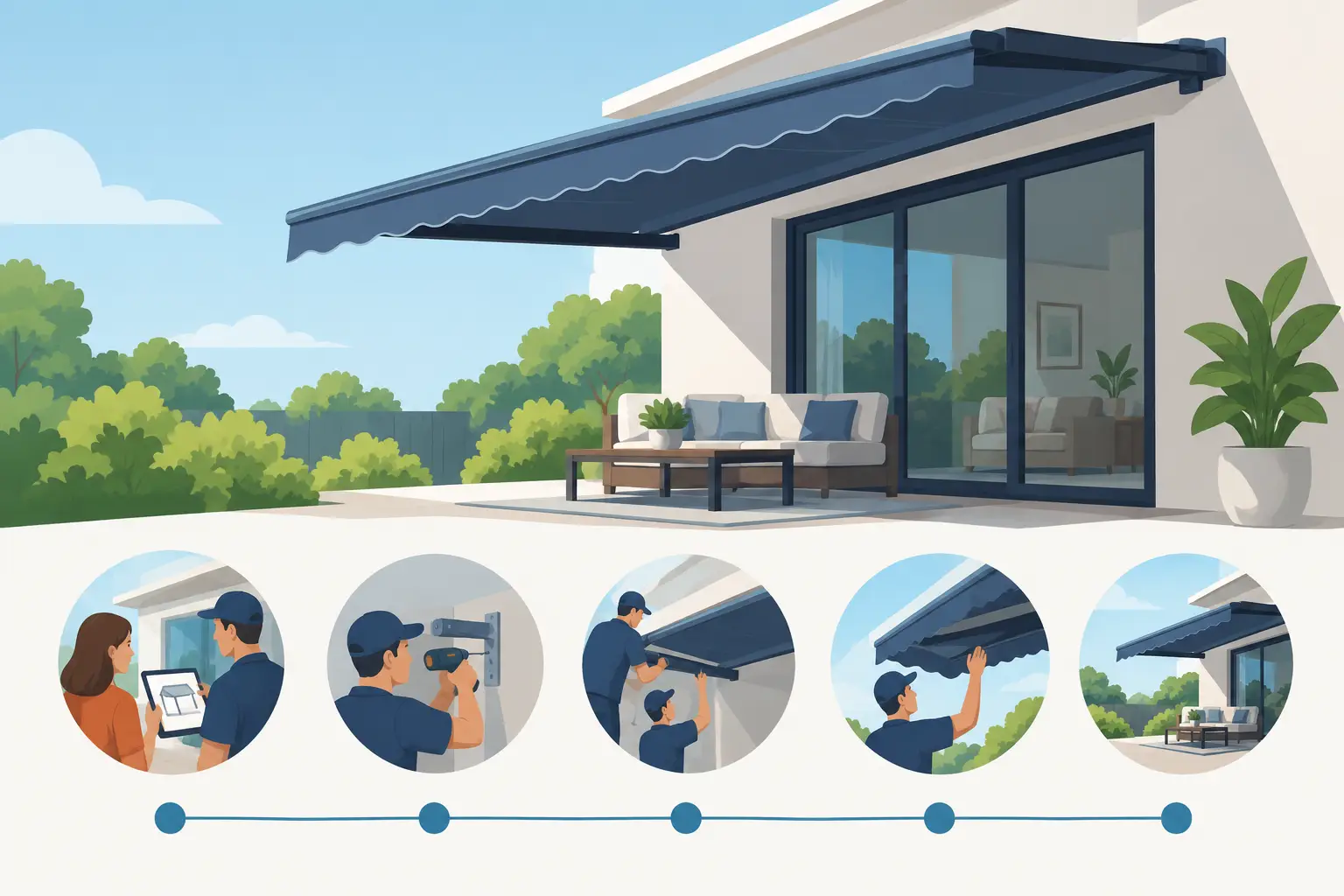
If you are comparing options for door awning installation near me, the process should feel straightforward. A reputable local contractor will typically start with an on-site visit, where they look at the door location, measure the opening, discuss style preferences, and talk through goals such as rain protection, shade, or curb appeal.
From there, you should receive a clear recommendation based on the home and your priorities. That includes the awning style, dimensions, material, finish options, and pricing. Because many door awnings are custom built, there is usually a production window before installation takes place.
Installation itself is often quicker than homeowners expect, assuming the site is ready and the product has been properly fabricated. The key is not speed alone. It is doing the work cleanly, securely, and with attention to the final appearance.
That local, full-service approach is one reason homeowners continue to choose established companies like May Awning & Patio for exterior shade and weather protection projects. Experience shows up in the details, especially on products that need to hold up season after season.
Is a door awning worth it?
For most homeowners, yes, if the problem is real and the installation is done correctly. A door awning is not a flashy upgrade, but it solves everyday issues that people notice immediately. Less rain at the doorway, more comfort at the entry, added protection for exterior materials, and a more finished look all provide lasting value.
The return is not only about resale. It is about living with a home that works better in the weather you actually have. In a climate where damp entryways and exposed doors are common, that is a practical improvement you can appreciate every week.
If you are considering a new awning, the smartest next step is to focus less on generic products and more on fit, durability, and who will stand behind the work. The right installer will help you choose an awning that looks right on day one and keeps doing its job long after the weather changes.

Related Posts
Comments (0)