
Compare the best carport designs for homes, from attached covers to freestanding structures, with practical tips for Pacific Northwest weather and style.
11 Lattice Patio Cover Ideas That Last
Some patio covers look great for a season and then start showing their limits the first time a Portland spring turns wet and windy. That is why smart lattice patio cover ideas need to do more than look attractive from the backyard. They need to create comfortable shade, fit the home, and hold up well in real Pacific Northwest weather.
A lattice patio cover sits in a useful middle ground. It is more open and airy than a solid cover, but more structured and intentional than a basic pergola with no overhead pattern. For homeowners who want filtered light, better curb appeal, and a defined outdoor living space without closing everything in, lattice is often the right answer. The best design depends on how much sun you get, how you use the patio, and how much maintenance you want to take on over time.
What makes lattice patio cover ideas work so well
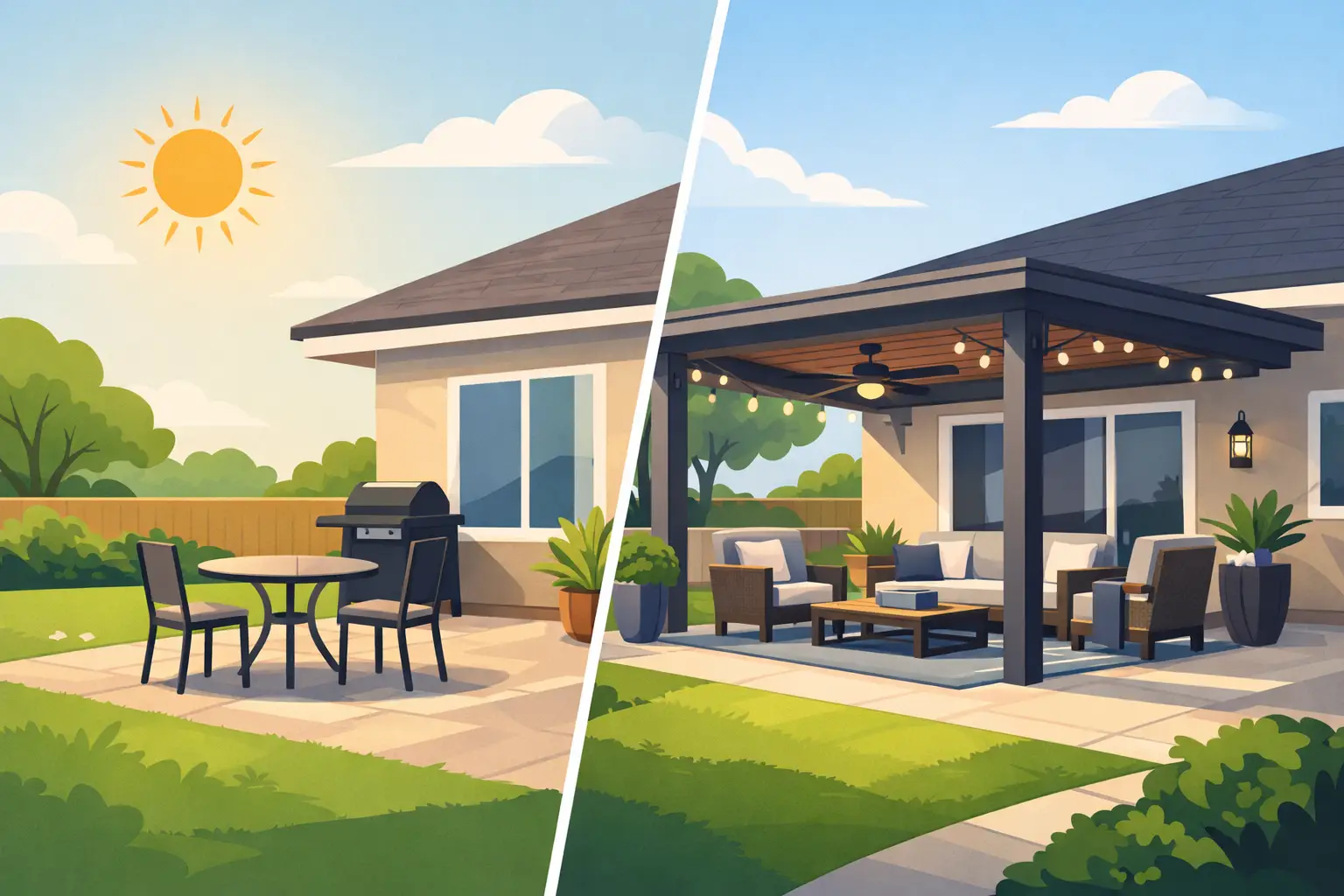
Lattice covers are popular because they soften the light instead of blocking it completely. That matters on patios that feel too exposed in summer but still benefit from daylight the rest of the year. A good lattice pattern can reduce glare, make outdoor seating more comfortable, and give the patio a finished architectural look.
There is also a flexibility factor. Lattice works with traditional homes, newer builds, and many transitional styles in between. It can be built as a freestanding feature in the yard or attached directly to the house. It can stay simple and clean, or it can become the framework for lighting, vines, privacy panels, and decorative trim.
The trade-off is straightforward. A lattice patio cover will not keep out steady rain the way a solid roof patio cover will. In the Northwest, that distinction matters. If your main goal is full weather protection for year-round outdoor use, a lattice design may need to be paired with other features or considered as part of a bigger outdoor living plan.
11 lattice patio cover ideas for a better outdoor space
1. Go with a classic white attached lattice cover
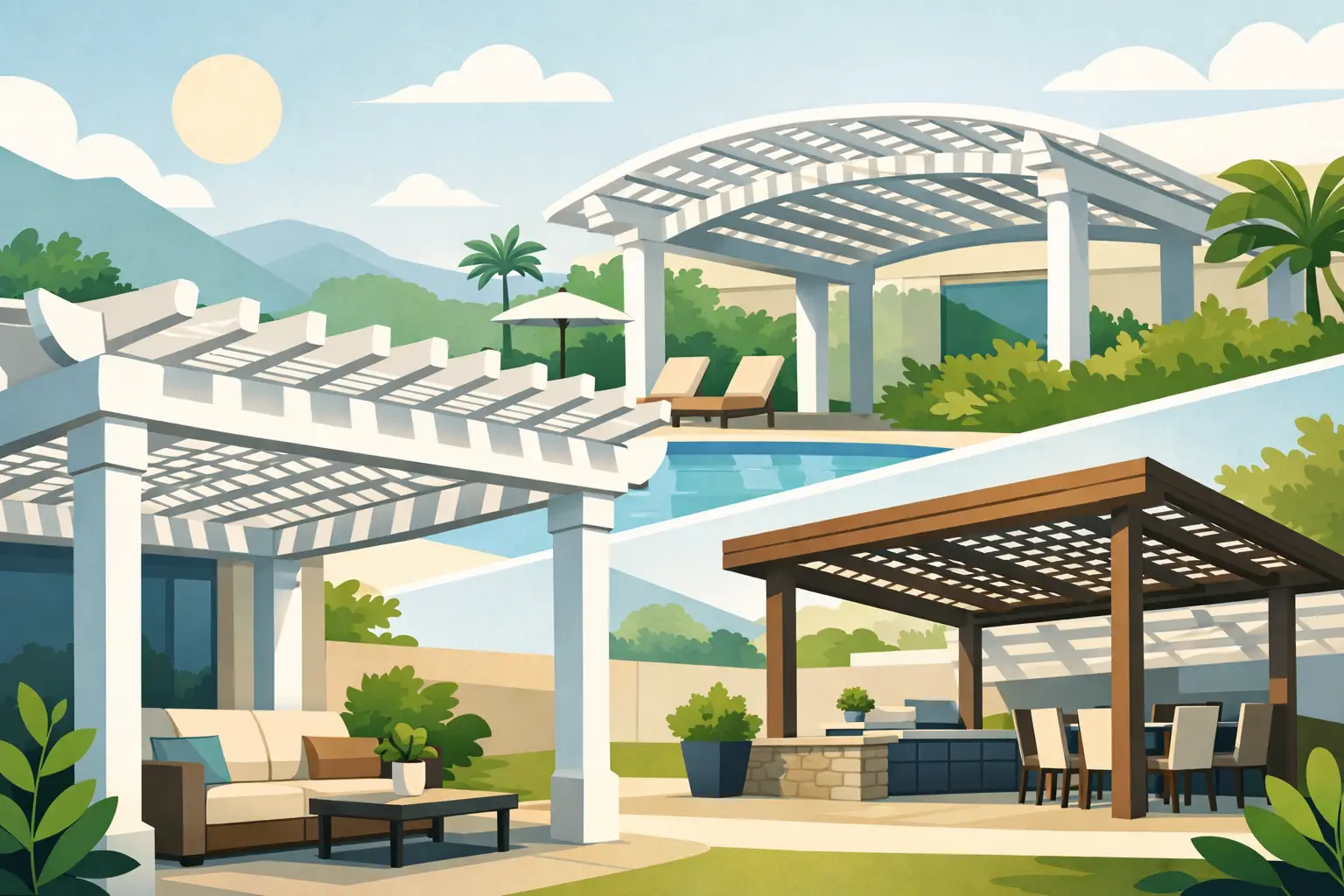
This is the look many homeowners picture first, and for good reason. A white attached lattice cover brightens the patio, complements a wide range of siding colors, and gives the back of the house a crisp, finished appearance. It works especially well on homes that already have white trim or a lighter exterior palette.
The advantage here is balance. You get shade without making the patio feel dark, and the cover feels like an extension of the home instead of a separate structure.
2. Choose a darker finish for stronger contrast
Not every lattice cover needs to disappear into the background. On homes with lighter siding, a bronze, black, or darker painted finish can frame the patio in a more dramatic way. This can make the outdoor area feel more modern and intentional.
Darker finishes do show heat a bit more in direct sun, and the overall effect is bolder. If you want the patio to feel like a design feature, not just a utility upgrade, this option is worth considering.
3. Widen the slat spacing for a more open feel
One of the most overlooked design choices is spacing. Wider spacing between lattice members creates a lighter, more open structure. It is a good fit for patios that already get partial shade from trees or for homeowners who do not want to block much natural light from adjacent windows.
The trade-off is less shade during peak sun hours. If the patio is west-facing and gets strong afternoon exposure, wider spacing may not give enough relief.
4. Tighten the spacing for more usable shade
Closer spacing gives the patio a more sheltered feel and improves comfort on hot afternoons. This approach is especially useful when the patio sits in direct sun for much of the day. It still keeps the open look of lattice, but the shade pattern is stronger and more practical.
This is often a smart middle-ground choice for Northwest homeowners who want solar relief in summer without fully closing off the patio overhead.
5. Add privacy panels on one or two sides
Some of the best lattice patio cover ideas are not only about the roof line. Side lattice panels can make the space feel more private, especially in neighborhoods where patios are close together. They can also help block low-angle sun and create a stronger sense of enclosure.
Used carefully, privacy panels make a patio feel more like an outdoor room. Used too heavily, they can make a smaller area feel boxed in. The right amount depends on the size of the patio and the openness of the yard.
6. Combine lattice with climbing plants
If you want a softer, garden-focused look, lattice is a natural partner for vines and climbing plants. Over time, greenery can create extra shade and turn a basic patio into a feature that feels established and custom.
This idea works best for homeowners who enjoy seasonal upkeep. Plants add beauty, but they also add maintenance. Moisture, growth weight, and regular trimming all need to be part of the plan, especially in a damp climate.
7. Build in lighting for evening use
A patio cover should work after sunset too. Integrated lighting can make a lattice structure far more useful for dinners, gatherings, or just relaxing outside after the day cools down. String lights can create a casual feel, while mounted fixtures or recessed options look more permanent and polished.
The key is to plan the lighting early. It is much easier to incorporate clean electrical work during the design and installation process than to add it later.
8. Match the lattice cover to existing architecture
The most successful projects usually do not look added on as an afterthought. They echo the home. That might mean matching column style, trim details, roofline proportions, or overall color. A simple lattice cover can look custom when the dimensions and finish are chosen carefully.
This matters for resale value as much as daily enjoyment. Buyers notice when outdoor structures feel integrated instead of improvised.
9. Use decorative end cuts and trim details
Small details change the entire impression of a patio cover. Decorative end cuts, wrapped posts, and finished trim can shift a structure from plain and functional to polished and tailored. These details are especially effective on traditional homes and craftsman-influenced styles common in the Portland and Vancouver area.
They are not just cosmetic. Good finish work often signals better overall craftsmanship, and that tends to matter over the life of the structure.
10. Create a defined dining zone
A lattice cover does not have to span the entire patio to be effective. Sometimes the best approach is to cover the part of the space you actually use most. Defining a dining area with a lattice overhead can make that section feel more comfortable and purposeful while leaving the rest of the patio open.
This can also be a budget-smart choice. Instead of overbuilding, you focus the investment where it improves daily living the most.
11. Pair lattice with a larger outdoor living plan
For some properties, lattice is one piece of the solution rather than the entire answer. A home might benefit from lattice over a sitting area and a more solid weather-protective cover over a grill station or doorway. That kind of combination can make the backyard more usable across different seasons.
This is where on-site planning really matters. Shade patterns, drainage, traffic flow, and the home’s orientation all affect what will work best long term.
Choosing materials for a lattice patio cover
Material choice has a big impact on maintenance, appearance, and lifespan. Wood offers warmth and character, but it usually asks more from the homeowner over time. In the Pacific Northwest, moisture exposure means sealing, painting, or staining cannot be ignored.
Aluminum and other low-maintenance materials are often a strong fit for homeowners who want durability and less upkeep. They can provide a clean, finished look and hold up well when properly designed and installed. For many households, that combination of appearance and long-term practicality is the deciding factor.
How to know if lattice is right for your patio
The honest answer is that it depends on how you want to live outside. If you want filtered sunlight, visual interest, and a patio that feels open but more comfortable, lattice is a strong option. If you want to sit outside during extended rain or keep furniture fully protected year-round, a solid cover may be the better fit.
Orientation matters too. South- and west-facing patios often benefit most from shade control. Smaller patios may need a lighter design to avoid feeling crowded. Larger yards can support bolder structures with added privacy features, lighting, and landscaping.
A well-designed lattice cover should feel easy to live with. It should improve the patio without creating new frustrations. That usually comes down to thoughtful sizing, durable materials, and installation that reflects local weather conditions rather than a one-size-fits-all plan.
For homeowners around Portland and Vancouver, the best projects usually start with a practical question: what do you want this patio to do better than it does now? Once that answer is clear, the right lattice design tends to follow. A good patio cover should not just fill space overhead. It should make the space below it more comfortable, more inviting, and easier to enjoy for years to come.

Related Posts
Comments (0)